On this page
Planning a full week of lessons can feel overwhelming when you're balancing classroom instruction, grading, parent communication, and other responsibilities. A well-organized weekly lesson plan for teachers can make the process easier by helping you set clear learning goals, prepare materials in advance, and organize activities across the school week.
The goal isn't to plan every minute of every day. It's to create a flexible structure that keeps learning on track while leaving room to respond to your students' needs.
Whether you're a new elementary teacher, an experienced educator looking to simplify your routine, or a homeschool educator organizing weekly learning activities, this guide will help you create a practical plan you can reuse and adapt.
What Should a Weekly Lesson Plan Include?
A weekly lesson plan provides an overview of what students will learn, how you'll teach it, and how you'll check their understanding.
Although planning requirements vary by school and grade level, most useful weekly plans include the following elements:
- Subject and grade level: Identify the class and subject you're planning for.
- Weekly learning objectives: Specify what students should know or be able to do by the end of the week.
- Daily lesson topics: Break the week's learning into manageable sections.
- Teaching activities: Outline instruction, discussions, guided practice, and independent work.
- Worksheets and learning materials: List the resources students will need.
- Assessments: Include quick checks, exit tickets, quizzes, or other ways to monitor understanding.
- Differentiation and additional support: Plan adjustments for students who need more help or additional challenges.
- Homework or extension activities: Include these when appropriate for your classroom.
- Notes and reflections: Record what worked, what needs review, and what to change next week.
You don't need to give every component equal space. Learning objectives, daily activities, and ways to check understanding are a good starting point. Other sections can be added according to your teaching needs.
How to Create a Weekly Lesson Plan in 7 Steps
A repeatable planning routine can help you move from a list of topics to a clear, usable teaching plan.
Step 1: Review Curriculum Standards and Learning Goals
Start by identifying what students are expected to learn. Review your curriculum standards, current unit, previous assessments, and any learning goals established by your school.
Instead of beginning with activities, begin with the intended learning outcome.
Example: For a Grade 3 mathematics class, your weekly goal might be for students to understand multiplication as equal groups and solve multiplication problems using appropriate strategies.
This gives your lessons a clear direction and helps you avoid activities that don't contribute meaningfully to the learning goal.
Step 2: Identify the Most Important Learning Objectives
Choose a manageable number of objectives for the week. Your students may need several lessons to develop a skill, so avoid trying to cover too many new concepts at once.
For each objective, ask:
- What should students understand by the end of the lesson or week?
- What will students do to practice the skill?
- How will I know whether they understand it?
Example: For a multiplication unit, your objectives might include representing multiplication with equal groups, recalling selected multiplication facts, and solving simple multiplication word problems.
These objectives can guide your daily activities, worksheets, and assessments.
Step 3: Map Out the Week
Distribute the learning objectives across Monday through Friday. Think about how each lesson will build on the previous one.
A simple progression might include introducing a concept, practicing it together, working independently, applying the skill, and reviewing progress.
| Day | Planning focus |
|---|---|
| Monday | Introduce the concept and identify what students already know. |
| Tuesday | Model the skill and practice together. |
| Wednesday | Build understanding through guided and independent practice. |
| Thursday | Apply the skill to problems or real-world examples. |
| Friday | Review the week's learning and assess understanding. |
Treat this as a flexible framework rather than a fixed schedule. School events, student questions, and unexpected learning gaps may require you to adjust the plan.
Step 4: Plan Engaging Teaching Activities
Once you've mapped out the week, choose activities that help students achieve the learning objectives.
Elementary students benefit from a mix of teaching approaches, including:
- Direct instruction and teacher modeling
- Class discussions and questioning
- Hands-on activities and demonstrations
- Guided practice with teacher support
- Independent assignments
- Partner work and collaborative problem-solving
- Games and review activities
Example: When introducing multiplication, you could use counters or small objects to demonstrate equal groups before moving to number sentences.
Later in the week, students could solve multiplication word problems independently or work with a partner to explain their reasoning.
Choose activities based on the skill you're teaching, your students' needs, and the resources available in your classroom.
Step 5: Prepare Worksheets and Practice Materials
Planning the lesson is only part of the preparation. You also need to identify the worksheets, examples, manipulatives, and other materials students will use.
Worksheets provide opportunities to practice a newly introduced skill, reinforce classroom instruction, and help you identify areas where students need additional support.
For example, a multiplication lesson might include:
- A worksheet using pictures of equal groups
- Practice problems involving multiplication facts
- Word problems that require students to apply their understanding
When you need additional practice materials, StudyNest's printable worksheets offer resources across subjects and grade levels. You can explore the available topics and prepare practice activities that complement your classroom instruction.
Before using any worksheet, check that the questions are accurate, appropriate for your grade level, and aligned with your lesson objectives.
Step 6: Include Differentiation and Assessment
Students may approach the same concept with different levels of confidence and understanding. A useful weekly lesson plan considers these differences before the lesson begins.
Think about how you can provide support without losing sight of the main learning objective.
For example, during a multiplication unit:
- Students who need additional support could use counters, arrays, visual examples, or smaller numbers.
- Students who are developing proficiency could practice multiplication facts and solve structured word problems.
- Students ready for additional challenges could solve multi-step problems or explain different ways to reach the same answer.
Plan a simple way to check understanding, too. This could be an exit ticket, a short quiz, a few oral questions, or a review of student work.
These checks help you decide whether to move forward, provide additional practice, or revisit a concept in the next lesson.
Step 7: Review and Refine the Plan
Your weekly lesson plan should evolve as you learn more about your students' progress.
At the end of the week, take a few minutes to reflect on three questions:
- Which learning objectives did students meet?
- Which concepts need additional explanation or practice?
- What should I change in next week's plan?
Example: If many students can solve multiplication facts but struggle with word problems, plan another lesson that focuses on identifying the information in a problem and choosing the correct operation.
This brief reflection makes your next planning session more focused because you're starting with what actually happened in the classroom.
Example of a Weekly Lesson Plan for Elementary Teachers
Here's an illustrative weekly lesson plan for a Grade 3 mathematics unit on multiplication. It demonstrates how learning objectives, teaching activities, and assessments can work together across five days.
Grade: 3 Subject: Mathematics Weekly objective: Students will develop an understanding of multiplication, practice multiplication facts, and apply multiplication to simple word problems.
| Day | Learning focus | Classroom activity | Practice or assessment |
|---|---|---|---|
| Monday | Understanding multiplication as equal groups | Use counters or drawings to create equal groups and connect them to multiplication sentences. | Students draw equal groups and write matching multiplication sentences. |
| Tuesday | Connecting arrays to multiplication | Model rows and columns using objects, grid paper, or visual examples. | Students represent multiplication problems using arrays. |
| Wednesday | Practicing multiplication facts | Model strategies for solving selected multiplication facts, followed by guided and independent practice. | Students complete practice questions and explain one solving strategy. |
| Thursday | Solving multiplication word problems | Read simple word problems together and identify the equal groups represented. | Students solve word problems and explain their answers. |
| Friday | Reviewing and checking understanding | Review key concepts through a short class activity and discuss common errors. | Students complete a short assessment covering equal groups, multiplication facts, and word problems. |
This is an example, not a prescribed curriculum. Adjust the sequence according to your school's expectations, the multiplication concepts your class has already covered, and the progress students make during the week.
The important principle is that each day's lesson builds toward the weekly objective rather than treating every activity as a separate task.
How to Save Time During Weekly Lesson Planning
Effective planning doesn't require an elaborate document or a completely new set of activities every week. A few consistent habits can make preparation more manageable.
1. Use a Consistent Weekly Planning Template
Choose a layout that includes your learning objectives, daily activities, materials, and assessments. Reusing the same format reduces the need to organize your planning from scratch each time.
2. Reuse Activities That Work
If a classroom activity helps students understand a concept, keep it in your collection of teaching resources. Adapt the questions, difficulty, or examples to match your current objectives instead of rebuilding the activity.
3. Prepare Materials in Batches
Gather or create worksheets, visual aids, and other resources for several lessons during the same planning session. This helps you see whether the materials support the week's learning progression.
4. Create Practice Materials Around Specific Learning Gaps
Rather than preparing extra worksheets simply to fill time, identify the skills students need to practice.
For example, if students struggle to represent multiplication using arrays, prepare additional visual practice before moving to more complex word problems.
5. Keep Assessment Notes Concise
You don't need to write a detailed report after every lesson. A few notes about common errors, students who need support, and concepts that require review can be enough to guide your next steps.
6. Leave Room for Flexibility
Avoid scheduling every minute of the school day. Allow time for questions, transitions, reteaching, and unexpected classroom needs.
A realistic plan is more useful than one that looks perfect on paper but becomes difficult to follow.
7. Use Digital Tools Selectively
Digital resources can help with repetitive preparation tasks, such as finding practice activities or organizing learning materials.
Choose tools that address a specific need in your workflow. Always review the materials before sharing them with students.
Common Weekly Lesson Planning Mistakes to Avoid
Even experienced teachers can make their planning more complicated than necessary. Watch out for these common mistakes.
Including too many learning objectives
Trying to cover too many concepts can leave students with limited opportunities to practice.
Instead: Prioritize the most important learning outcomes and give students enough time to develop the intended skills.
Planning activities without clear learning outcomes
An engaging activity isn't necessarily effective if it doesn't support the lesson objective.
Instead: Before adding an activity, ask what students should learn or demonstrate through it.
Overloading every day
A tightly packed schedule leaves little room for discussion, questions, or reteaching.
Instead: Identify the essential activities and keep optional extensions available if time permits.
Forgetting assessment and review
Completing an activity doesn't automatically mean students have understood the concept.
Instead: Include a quick check for understanding and use the results to guide your next lesson.
Ignoring different student needs
A single task may not provide the right level of support or challenge for every student.
Instead: Prepare alternative examples, visual supports, or extension questions where appropriate.
Spending too much time designing the planning document
A visually elaborate planner can become another task to manage.
Instead: Prioritize readability, useful sections, and ease of use over decorative details.
Treating the plan as fixed
Classroom learning rarely follows an exact script.
Instead: Review student progress throughout the week and adjust the sequence when necessary.
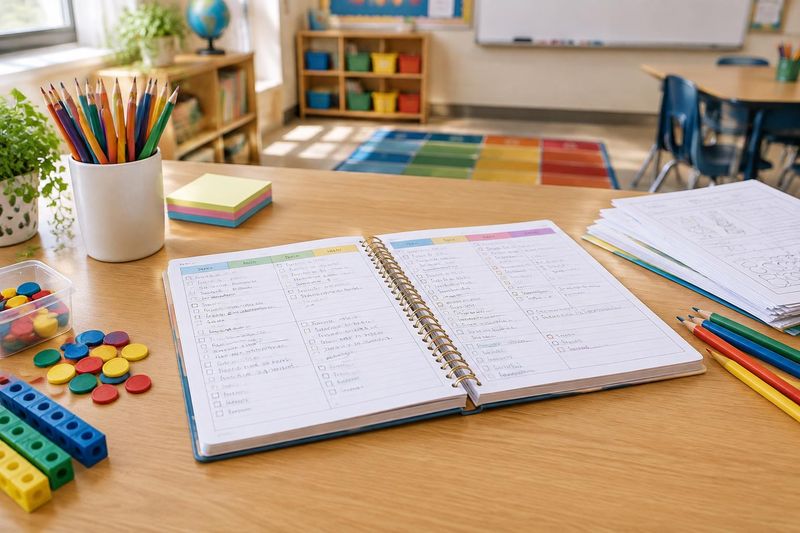
Printable Weekly Lesson Plan Templates: What to Look For
A weekly lesson plan template should make your work easier, not add another layer of administration.
When choosing a printable planning template, look for these characteristics:
- A clear weekly layout: See the structure of the week at a glance.
- Space for learning objectives: Keep the intended outcomes visible while planning activities.
- Room for daily activities: Record the main teaching steps without overcrowding the page.
- Materials and assessment sections: Track resources and ways to check understanding.
- Flexible notes: Record differentiation needs, reminders, and follow-up tasks.
- A readable, print-friendly design: Make the template practical to use repeatedly.
The right format depends on how you work. Some teachers prefer a simple one-page weekly overview, while others want a more structured approach to planning and classroom organization.
If you prefer a printable resource, explore the All-in-One Teacher Planning System from Growingsquirrel on Etsy.
It offers an option for teachers who want a structured printable planning resource. Review the listing to see whether its format and included templates suit your teaching routine.
How StudyNest Can Help With Weekly Learning Preparation
Once your weekly objectives are clear, preparing suitable practice materials can become part of your regular planning routine.
StudyNest is a learning platform for K–8 students that brings together worksheets, flashcards, and quizzes.
Teachers can use these resources to support different stages of a learning unit.
For example, when planning a multiplication unit, you could:
- Prepare a worksheet: Give students additional practice to complete independently.
- Use flashcards: Review multiplication facts and reinforce recall.
- Create a quiz: Check students' understanding of the concepts covered during the week.
These resources can complement classroom instruction, but they don't replace the teacher's judgment. Choose appropriate topics, review the content, and adapt the materials to your students' grade level and learning needs.
Preparing practice materials for your next lesson? Explore StudyNest's worksheets for elementary students and find practice resources to complement your lessons.
Frequently Asked Questions
How far in advance should elementary teachers plan lessons?
Many teachers prepare an overview for the upcoming week and review individual lessons before teaching them. The ideal schedule depends on your school's planning requirements, curriculum, and personal workflow.
Planning ahead can help you prepare materials and identify potential gaps, while a short daily review gives you an opportunity to make adjustments.
What should a weekly lesson plan include?
A weekly lesson plan should generally include learning objectives, daily lesson topics, teaching activities, required materials, and ways to assess student understanding. You can also include differentiation, homework, and reflection notes according to your classroom needs.
How long should weekly lesson planning take?
There is no universally correct planning duration. The time required depends on your grade level, subjects, curriculum requirements, teaching experience, and how much preparation your lessons need.
A consistent template and reusable resources can help reduce repetitive work.
Can I use the same weekly lesson plan template every week?
Yes. A reusable template can provide a consistent structure for planning. Keep the format that works for you, but update the objectives, activities, resources, and assessments to reflect the needs of each unit and class.
How do I adapt a weekly lesson plan for students at different learning levels?
Start with a shared learning objective, then consider different ways students can reach it. You might provide visual supports or guided examples for students who need additional help, while offering more complex questions to students ready for a challenge.
Use assessment results and classroom observations to decide which adjustments are appropriate.
Are digital tools useful for elementary lesson planning?
Digital tools can help teachers organize resources and prepare additional practice activities. Their usefulness depends on the task and the quality of the materials. Review everything for accuracy, suitability, and alignment with your learning objectives before using it in class.
Conclusion: Make Weekly Lesson Planning More Manageable
A useful weekly lesson plan doesn't need to be complicated. Start with clear learning objectives, map out how lessons will build across the week, prepare suitable materials, and include simple ways to check student understanding.
At the end of the week, use what you learned about your students' progress to refine the next plan.
If you're ready to make your planning routine more organized, explore these resources:
- For classroom practice: Visit StudyNest to explore worksheets, flashcards, and quizzes for K–8 learning.
- For printable planning: Explore the All-in-One Teacher Planning System on Etsy for a printable approach to organizing your teaching week.
Choose the tools that fit your needs, keep your planning process practical, and remember that a good lesson plan is one that helps you respond to your students and support their learning.
Featured product
Ready practice for next week's lessons
Printable worksheets, flashcards, and quizzes across subjects and grade levels to support your weekly plan.
Try StudyNest