On this page
A child can read every word on a page and still struggle to explain what the passage means. They might recognize the characters in a story but have difficulty describing why someone made a particular decision. Or they may finish a paragraph without remembering its main idea.
These situations highlight an important part of learning to read: reading comprehension.
Reading comprehension is the ability to understand, interpret, connect, and think about information in a text. It helps children follow stories, learn new concepts, recognize important details, and make sense of what they read.
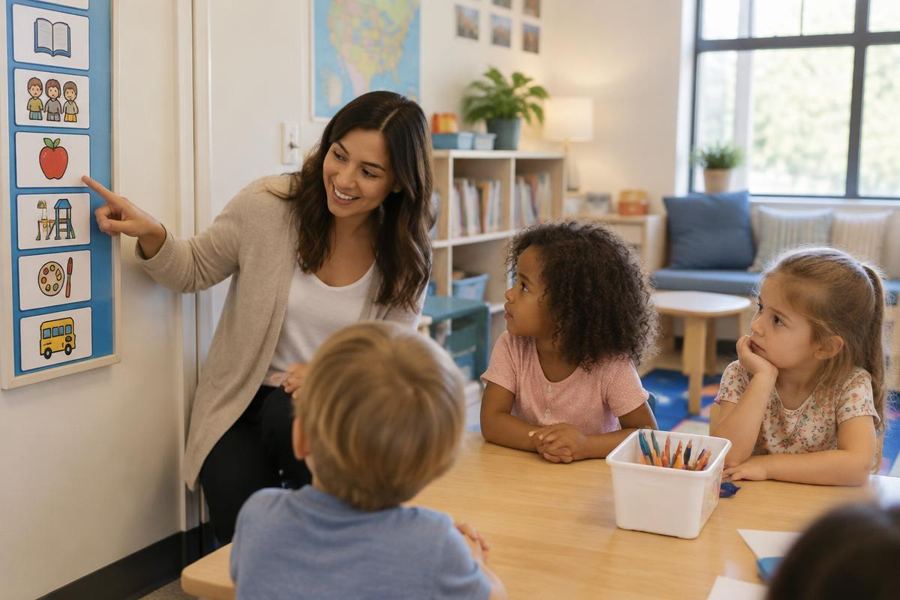
For elementary students, comprehension develops through regular opportunities to read, listen, discuss, ask questions, and think about different kinds of texts. Teachers can build these opportunities into classroom lessons, while parents can reinforce the same skills through everyday reading at home.
The good news is that reading comprehension practice does not always need to involve lengthy passages or worksheets. A conversation about a story, a prediction before turning the page, or a simple retelling after reading can all encourage children to think more deeply.
Here are 10 practical reading comprehension activities for elementary students that teachers and families can use at home and school.
Why Are Reading Comprehension Activities Important?
Reading comprehension helps children move beyond recognizing words to understanding the meaning behind them.
When students understand what they read, they can:
- Identify the main idea and supporting details.
- Understand characters, events, and story settings.
- Learn new vocabulary from context.
- Make connections between a text and their own experiences.
- Recognize information that is directly stated and information they need to infer.
- Remember and explain important information.
- Develop curiosity and confidence when reading independently.
Comprehension also supports learning in other subjects. Students use reading skills to follow mathematics word problems, understand science explanations, interpret social studies information, and complete written instructions.
The What Works Clearinghouse practice guide on improving reading comprehension recommends explicitly teaching comprehension strategies, helping students recognize text structures, encouraging focused discussion, choosing texts purposefully, and creating an engaging reading environment.
These skills develop over time. Children benefit from seeing adults model how to think while reading, practicing strategies with guidance, and gradually applying them independently.
10 Reading Comprehension Activities for Elementary Students
The following activities can be adapted for different reading levels and used with stories, informational books, short passages, and age-appropriate articles.
1. Predict What Happens Next
Skill developed: Predicting and activating prior knowledge.
Before reading, invite children to look at the book cover, title, illustrations, or opening paragraph. Ask them what they think the text might be about and what clues helped them make that prediction.
During reading, pause at an interesting moment and ask what they think might happen next.
Try questions such as:
- What do you think this story will be about?
- What might the character do next?
- Which clues helped you make that guess?
- Has anything happened that changed your prediction?
At home: While reading a bedtime story, pause before turning a page and let your child predict what might happen.
At school: Ask students to write or draw one prediction before reading a class story. Return to it afterward and discuss whether the prediction changed.
The goal is not to guess the ending correctly. It is to encourage children to use information from the text and their existing knowledge to form ideas.
2. Ask Questions While Reading
Skill developed: Questioning and active reading.
Good readers do not simply move from one sentence to the next. They think about what they are reading and ask questions to clarify ideas.
Encourage children to ask questions before, during, and after reading.
Examples include:
- Who is the main character?
- Why did the character make that choice?
- What does this word mean?
- What is the most important thing happening here?
- What information would I like to know more about?
At home: Take turns asking one question about a book. Let your child ask the next question.
At school: Use a question card during partner reading. Each student asks their partner a question about the section they have just read.
For younger children, begin with straightforward questions about people, places, and events. Gradually introduce questions that require explanations and evidence from the text.
3. Visualize the Story
Skill developed: Mental imagery and understanding descriptive language.
Visualizing means creating a mental picture of what is happening in a text. Children use details from the words to imagine characters, places, actions, and events.
This activity can be especially useful when a text contains descriptive language.
At home: Read a short paragraph describing a place. Ask your child to draw what they imagine. Compare the drawing with the descriptions in the book.
At school: Read a passage aloud without showing the illustrations. Ask students to sketch the setting or an important scene using clues from the text.
Discuss which words helped them create their mental picture.
For example, if a passage describes a small wooden cabin beside a quiet lake, students can identify the words that helped them imagine the setting.
Remind children that their drawings do not need to look identical. The important part is connecting their ideas to details in the text.
4. Retell the Story in Their Own Words
Skill developed: Sequencing, recall, and summarizing.
Retelling helps children organize information and identify the events that matter most.
After reading a story, ask children to explain what happened in their own words rather than repeating every sentence.
A simple five-finger retelling activity can help:
| Finger | What to remember |
|---|---|
| Thumb | Who were the main characters? |
| Index finger | Where did the story happen? |
| Middle finger | What was the main problem or event? |
| Ring finger | What happened next? |
| Little finger | How did the story end? |
At home: Ask your child to tell another family member about the story they read.
At school: Let students use the five-finger method to retell a story to a partner or small group.
As children become more confident, encourage them to identify the beginning, middle, and end without relying on prompts.
5. Find the Main Idea and Supporting Details
Skill developed: Identifying important information.
Children sometimes remember interesting facts from a passage but struggle to explain what the whole passage is mainly about.
Teach them to distinguish between the main idea and supporting details.
For example, a nonfiction passage about bees might include information about flowers, honey, hives, and pollination.
The main idea could be:
"Bees play an important role in helping many plants reproduce."
Supporting details might explain how bees carry pollen, visit flowers, and contribute to the growth of fruits and seeds.
At home: After reading a short informational passage, ask your child to explain it in one sentence.
At school: Give students a short passage and ask them to underline the main idea and circle two details that support it.
A useful question is: "If you could tell someone only one thing about this passage, what would it be?"
This activity is particularly useful for nonfiction reading and helps prepare students to understand information across different subjects.
6. Learn New Words Through Context
Skill developed: Vocabulary and contextual understanding.
Understanding unfamiliar words is an important part of reading comprehension. Instead of immediately providing a definition, encourage children to look at the surrounding sentences for clues.
For example:
"The puppy was exhausted after running around the park. It curled up in its bed and quickly fell asleep."
Even if a child does not know the word "exhausted," the surrounding information provides clues about its meaning.
Try these steps:
- Identify an unfamiliar word.
- Read the sentence again.
- Look at the surrounding information.
- Discuss what the word might mean.
- Check the meaning and use the word in a new sentence.
At home: Choose one interesting word from a story and ask your child to explain it using the context.
At school: Create a vocabulary wall where students add new words, simple definitions, and example sentences from their reading.
Do not stop at memorizing definitions. Encourage children to use new words when speaking and writing.
7. Make Connections to Real Life
Skill developed: Connecting text to personal experiences and background knowledge.
Children often understand a story more deeply when they can connect it to something they already know.
Help them make three kinds of connections:
- Text-to-self: Does this remind you of something that happened to you?
- Text-to-text: Does this remind you of another book or story?
- Text-to-world: Does this connect to something you have seen or learned about in the world?
At home: If a character visits a farm, talk about whether your child has visited one or seen farm animals.
At school: After reading a story about friendship, ask students whether the characters' experiences remind them of another story or a situation they have observed.
These conversations help children bring their existing knowledge into reading and explore how ideas connect.
Encourage relevant connections without allowing the conversation to move so far away from the text that its meaning gets lost.
8. Compare Characters, Events, or Information
Skill developed: Comparing, contrasting, and critical thinking.
Comparing information helps children notice similarities and differences rather than treating every detail as separate.
For a story, students might compare two characters. For nonfiction, they might compare two animals, places, or processes.
At home: Read two short stories and ask your child how the main characters are alike and different.
At school: Use a simple comparison chart or Venn diagram.
For example, after reading about frogs and toads, students might compare their habitats, appearance, and life cycles using details from the text.
Ask questions such as:
- What do both characters have in common?
- What is different about their choices?
- Which details support your answer?
- What did you learn from comparing the two texts?
Encourage students to refer back to the reading instead of relying only on what they remember.
9. Read Between the Lines: Make Inferences
Skill developed: Inferencing and interpreting information.
Not everything in a story is explained directly. Sometimes readers need to combine clues from the text with what they already know to understand what is happening.
This is called making an inference.
For example:
"Sam walked into the house with wet shoes and an umbrella dripping by the door. He placed his coat on the chair."
The text does not directly say that it is raining, but readers can use the clues to infer it.
At home: Pause during a story and ask, "What do you think is happening here? Which clues helped you work that out?"
At school: Give students a short paragraph with information that is implied rather than directly stated. Ask them to identify the clues and explain their thinking.
A useful sentence frame is:
"I think ______ because the text says ______."
This encourages students to support their ideas with evidence rather than making unsupported guesses.
10. Create a Short Summary or Story Map
Skill developed: Summarizing, organizing information, and identifying text structure.
After reading, ask children to organize the most important information into a simple story map or summary.
For fiction, a story map might include:
- Characters.
- Setting.
- Problem.
- Important events.
- Solution or ending.
For nonfiction, students can organize:
- Topic.
- Main idea.
- Important facts.
- Supporting details.
- What they learned.
At home: Ask your child to explain a book in three sentences or draw a simple story map.
At school: Let students complete a story map independently or work with a partner to summarize an informational passage.
The goal is to focus on the important ideas rather than copy every detail from the text.
Reading Comprehension Activities for Home and School: A Quick Comparison
Teachers and parents can practice the same comprehension skills in different ways.
| Reading skill | At home | At school |
|---|---|---|
| Predicting | Guess what happens next during a shared story. | Write predictions before reading a class text. |
| Questioning | Take turns asking questions about a book. | Use question cards during partner reading. |
| Visualizing | Draw a scene from a read-aloud. | Sketch a setting using descriptive clues. |
| Retelling | Explain a story to a family member. | Use a five-finger retell with a partner. |
| Main idea | Explain a passage in one sentence. | Highlight the main idea and supporting details. |
| Vocabulary | Discuss unfamiliar words in a story. | Add new words to a classroom vocabulary wall. |
| Making connections | Relate a story to a personal experience. | Make text-to-text and text-to-world connections. |
| Comparing | Compare two favorite characters. | Complete a Venn diagram using two texts. |
| Inferencing | Discuss clues about what is happening. | Explain an inference using evidence from a passage. |
| Summarizing | Describe a book in three sentences. | Create a story map or nonfiction summary. |
How to Adapt Reading Comprehension Activities for Different Grade Levels
Children develop reading and language skills at different rates. The same activity can be adapted by changing the length of the text, the complexity of the questions, and the amount of support provided.
Kindergarten and Grade 1
Focus on oral language, shared reading, listening comprehension, pictures, and simple story sequences.
Useful activities include:
- Predicting what happens from the cover.
- Naming characters and settings.
- Drawing a favorite scene.
- Retelling a story using pictures.
- Answering who, what, and where questions.
At this stage, adults can read aloud while children listen, discuss, and respond. Children do not need to read every text independently to practice comprehension.
Grades 2 and 3
Encourage children to explain their thinking and refer to details from the text.
Useful activities include:
- Identifying the main idea.
- Finding supporting details.
- Learning vocabulary from context.
- Comparing characters.
- Making simple inferences.
- Summarizing short stories and informational passages.
Begin to move from questions with one direct answer toward questions that require children to explain how they reached a conclusion.
Grades 4 and 5
Encourage deeper analysis, independent reading, and more detailed explanations.
Useful activities include:
- Comparing two texts on the same topic.
- Identifying the author's purpose.
- Distinguishing facts from opinions.
- Explaining how a character changes.
- Supporting inferences with text evidence.
- Summarizing longer informational passages.
- Discussing different interpretations of a text.
Offer a mix of fiction, biographies, articles, science texts, and other nonfiction so students practice comprehension across different subjects.
These are flexible suggestions rather than strict grade-level rules. Choose texts and activities based on each child's current reading, language, and comprehension skills.
How to Build a Simple Weekly Reading Comprehension Routine
Regular, manageable practice can make comprehension activities easier to fit into a busy school or family schedule. Teachers can build it into their weekly lesson planning for elementary teachers (opens in a new tab), and predictable reading routines also pair well with positive behavior support strategies (opens in a new tab) in the classroom.
Here is a simple example that teachers or parents can adapt:
| Day | Reading activity | Skill to practice |
|---|---|---|
| Monday | Read a short story and predict what happens next. | Predicting |
| Tuesday | Discuss unfamiliar words and their meanings. | Vocabulary |
| Wednesday | Draw a scene and explain the clues in the text. | Visualizing |
| Thursday | Identify the main idea and supporting details. | Understanding key information |
| Friday | Retell or summarize the reading. | Summarizing |
You do not need to introduce a new book every day. Revisit the same story or passage and explore it from a different perspective.
Keep sessions appropriate to the child's age and attention. A short, thoughtful discussion is often more useful than rushing through a long list of questions.
Tips for Making Reading Comprehension Practice More Enjoyable
Comprehension activities should help children engage with reading, not make every book feel like a test.
A few simple approaches can make a difference:
Let children choose some of their reading material. Stories, comics, nonfiction books, magazines, and age-appropriate articles can all create opportunities for discussion.
Mix fiction and nonfiction. Stories develop opportunities to discuss characters and events, while informational texts help children understand facts, explanations, and text structures.
Read aloud together. Listening to a more complex story can expose children to vocabulary and ideas they may not yet be able to read independently.
Encourage discussion. Ask open-ended questions and give children time to explain their thinking.
Model your own thinking. Say things such as, "I wonder why the character did that," or "I need to reread this sentence because I didn't understand it."
Avoid turning every reading session into a quiz. Make room for curiosity, enjoyment, and conversation.
Reading comprehension grows through meaningful engagement with texts. Children need opportunities to enjoy stories and explore ideas, as well as practice specific skills.
How StudyNest Can Support Elementary Learning Practice
Reading comprehension develops through a combination of reading, vocabulary, discussion, and opportunities to think about information.
Alongside books and shared reading, structured learning activities can give children additional opportunities to review concepts and practice skills.
StudyNest is a K-8 learning platform offering worksheets, flashcards, and quizzes.
Teachers and parents can use these learning tools to complement classroom lessons or home practice. For example:
- Worksheets can provide structured practice with age-appropriate English and other learning topics.
- Flashcards can help children review vocabulary and key terms.
- Quizzes can provide opportunities to revisit concepts and check understanding.
These tools can complement reading and discussion, but they do not replace reading meaningful texts, listening to children explain their ideas, or teaching comprehension strategies directly.
Looking for structured learning practice? Explore StudyNest (opens in a new tab) for worksheets, flashcards, and quizzes designed for K-8 learners.
You can also explore StudyNest's worksheets for elementary students (opens in a new tab) to find additional learning practice.
Frequently Asked Questions
1. What are reading comprehension activities for elementary students?
Reading comprehension activities help children understand, interpret, and discuss what they read. Examples include predicting, asking questions, visualizing, retelling, identifying the main idea, learning vocabulary, and making inferences.
2. How can I improve my child's reading comprehension at home?
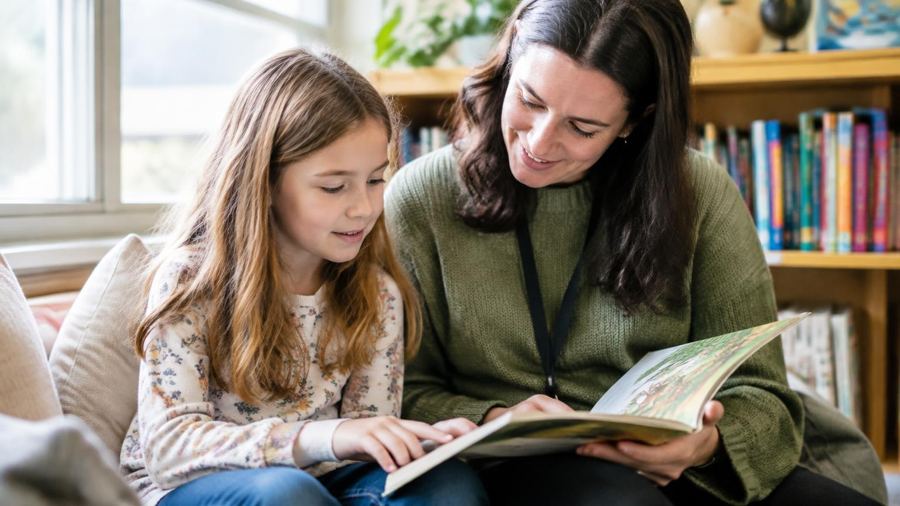
Read together regularly, discuss stories, ask open-ended questions, encourage predictions, and invite your child to retell what happened. Keep conversations enjoyable and give children time to explain their ideas.
3. What are some fun reading comprehension activities for the classroom?
Teachers can use partner reading, story maps, prediction activities, vocabulary walls, character comparisons, drawing activities, and short group discussions. Choose activities that match the text and the skill students are practicing.
4. What is the difference between reading and reading comprehension?
Reading involves recognizing and understanding written language. Reading comprehension is the process of making meaning from that language, connecting ideas, interpreting information, and remembering what a text communicates.
5. How do you teach reading comprehension to younger students?
Begin with shared reading, read-alouds, pictures, simple questions, predictions, and oral retelling. Model how to think about a story and gradually encourage children to explain their own ideas.
6. What are the six reading comprehension strategies?
A commonly taught set of strategies includes activating prior knowledge or predicting, questioning, visualizing, monitoring and clarifying understanding, drawing inferences, and summarizing or retelling.
7. How often should elementary students practice reading comprehension?
Regular opportunities to read and discuss texts are useful. The amount of practice should suit the child's age, reading level, attention, and learning needs. Short, meaningful activities can be incorporated into everyday reading rather than relying only on lengthy exercises.
8. Are worksheets enough to improve reading comprehension?
Worksheets can provide structured practice, but they should not be the only approach. Children also need opportunities to read meaningful texts, listen to read-alouds, discuss ideas, ask questions, and practice comprehension strategies while reading.
Conclusion
Strong reading comprehension develops when children learn to think about what they read, ask questions, make connections, and explain ideas in their own words.
Teachers can build these skills through classroom discussions, partner reading, story maps, and purposeful activities. Parents can reinforce them through shared reading, everyday conversations, and simple activities at home.
Start with one or two strategies, choose texts that interest the child, and gradually introduce more challenging questions as their confidence grows.
For additional structured learning practice, explore StudyNest (opens in a new tab) for worksheets, flashcards, and quizzes that complement K-8 learning.
References and Further Reading
For additional guidance on developing reading comprehension skills, explore these educational resources:
- Institute of Education Sciences: Improving Reading Comprehension in Kindergarten Through 3rd Grade (opens in a new tab)
- Institute of Education Sciences: Toolkit for Teaching K-3 Reading Comprehension (opens in a new tab)
- Reading Rockets: Comprehension Activities for Kindergarten (opens in a new tab)
- Reading Rockets: Comprehension Activities for First Grade (opens in a new tab)